
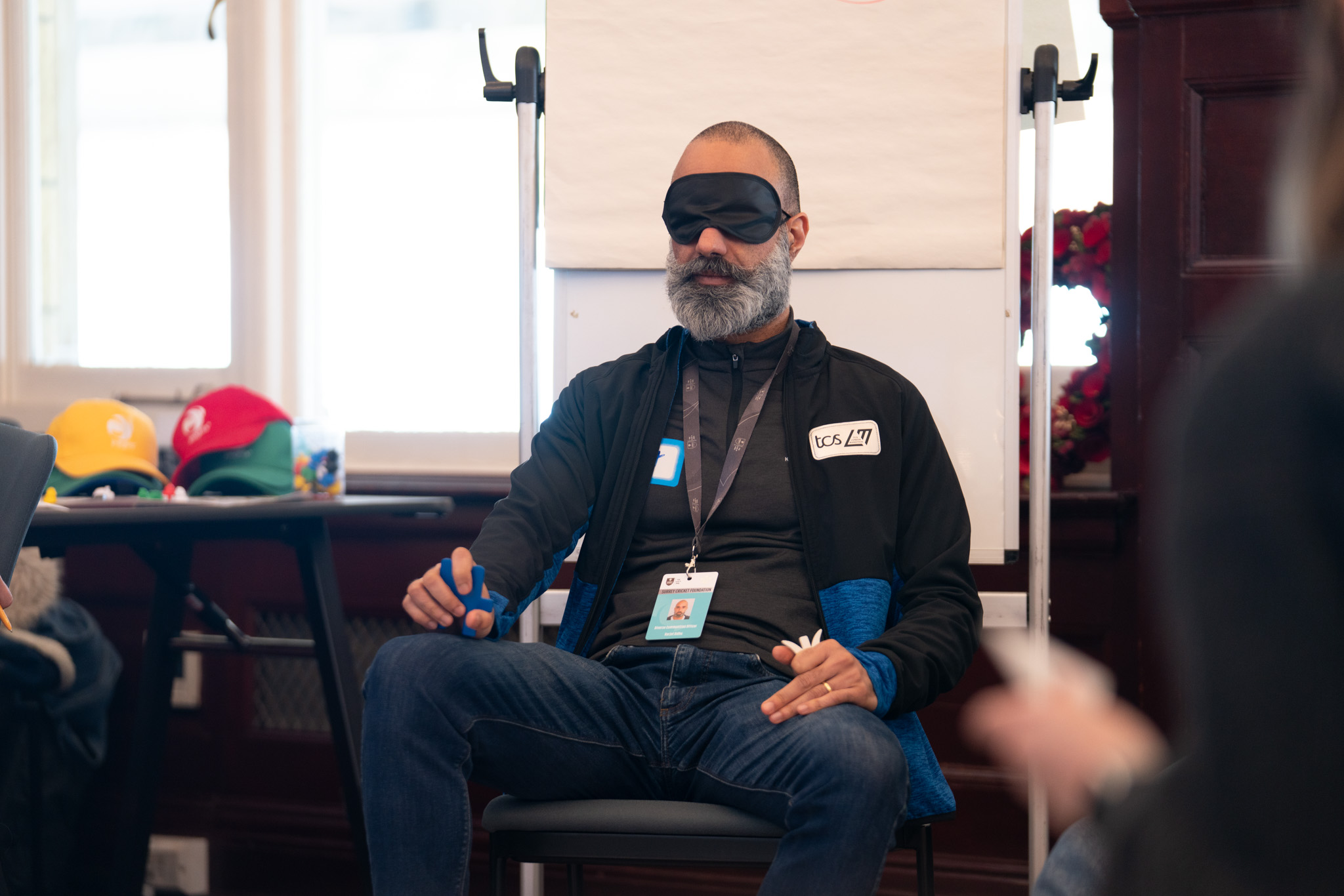
There is a version of team building that most people have experienced at least once. You do something together – a problem-solving challenge, a values exercise – and it generates something real in the room. Energy, laughter, the occasional moment of genuine recognition. And then everyone files out, goes back to their desks, and by Thursday it has largely evaporated.
This isn’t a reflection on the activity itself. It’s what happens when the debrief is treated as an afterthought or skipped entirely.
Whether we’re working with a senior leadership team at a corporate organisation or a cross-functional group in the not-for-profit sector, this is one of the things we come back to again and again: the team building exercises are the vehicle, not the destination. What people do with what they’ve experienced, the conversation that follows, is where real change takes root.
You can see what team building activities we offer here.
What a Debrief Actually Does
Good facilitation after a team activity isn’t summarising what just happened. It’s the process of helping a group extract meaning from the experience, connect it to the patterns and dynamics that already exist in their team, and make decisions about what to do differently.
That process has a number of distinct jobs. It creates the conditions for people to say what they actually noticed, not just what felt safe to say in the moment. It helps a team name something that may have been operating below the surface for months. And it holds the space for that naming to happen without things tipping into defensiveness or conflict, which takes more skill than it looks.
In our work across corporate team training and leadership workshops for teams, we often find that the most important conversations are the ones that haven’t happened yet. Not because people don’t want to have them, but because no one has created the conditions, or the structure, for them to happen.
The Gap Between Insight and Action
Team building activities can surface a great deal: how a team communicates under pressure, whose voices tend to dominate, where there are unspoken assumptions about roles and priorities. Insights Discovery team sessions, in particular, often produce a moment of collective recognition – the team graphic lands, patterns become visible, and people start making connections.
But noticing is not the same as shifting. And this is where leadership facilitation for senior teams earns its value.
A skilled facilitator holds the tension between what has been observed and what it means for how the team actually works together. They ask the questions that gently destabilise a settled narrative – not to create discomfort for its own sake, but because most teams have blind spots that have become so familiar they’re no longer visible. They listen for what isn’t being said as much as for what is. And they help the team build bridges between insight and action, so that the session produces something concrete and forward-looking rather than just a good conversation that fades.
As one of our clients, a co-facilitator from British Athletics, described after a particularly complex team session: “Tensions certainly did spark — and Will handled the issues in the room with grace. He gave space to people to think and express their views, he challenged people to speak honestly, he listened without judgement and helped people get clear on their views, and he then went on to help the team build bridges with one another.”
That’s the work. It’s not comfortable. And it’s not something that happens automatically.
Why This Matters More at Senior Levels
Leadership facilitation for senior teams carries its own particular demands. Senior groups tend to be composed of people who are very good at presenting confidence and cohesion – sometimes at the expense of honesty. Status dynamics can shape what gets said and who says it. And the stakes of naming something difficult are often higher, which means the temptation to stay in more comfortable territory is also higher.
This is why team alignment facilitation at senior level isn’t just about managing group dynamics in the room. It’s about creating the kind of psychological safety that allows a senior team to be genuinely candid with one another – and with themselves. That doesn’t come from the activity. It comes from the quality of what follows it.
What We’ve Learned
Across years of delivering corporate team training and leadership workshops for teams – from Magna Vitae to the Ivors Academy, from Charities Aid Foundation to JH&P – the sessions that produce lasting impact tend to share a few qualities.
They don’t rush the debrief. They treat it as the most important part of the day. They allow silence when something lands. They don’t move to the next slide the moment a room gets a little uncomfortable. And they follow up – because a single team building exercise, however well-facilitated, is rarely sufficient on its own. Change happens in the space between sessions as much as within them.
If you’re planning a team day, a leadership offsite, or a programme of corporate team training, it’s worth asking: who is holding the debrief? What will they do if a difficult conversation emerges? And what will the team leave with that they can actually act on?
Those questions tend to determine whether a day generates momentum, or just a good memory.
If you’d like to talk through what skilled facilitation could look like for your team, get in touch with us here.