
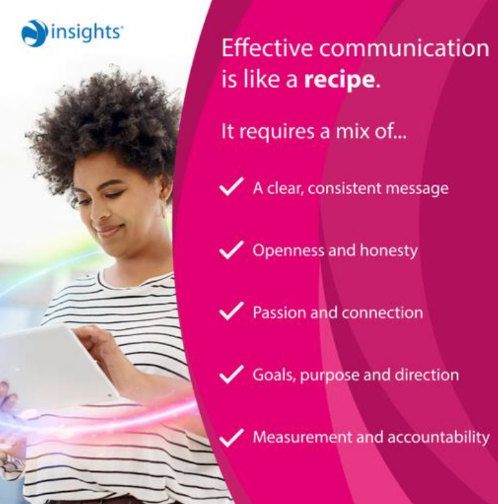
Most people, when they first encounter Insights Discovery, focus on what their colour profile says about them. That’s natural, understanding yourself feels like the point of a personality test. But the real shift in capability comes later, when you start to use that self-knowledge to change how you show up for others.
That’s what this post is about: not what your colour profile tells you about yourself, but what it opens up in your relationships with colleagues, teams, and anyone you’re trying to reach.
The Difference Between Knowing and Doing
Insights Discovery gives teams a shared language. Most people who’ve worked with it can describe their own leading preferences, and often those of the people they work closest with. But knowing someone leans strongly into Cool Blue, or that a colleague’s Sunshine Yellow energy fills a room, doesn’t automatically change how you communicate with them. That’s a different skill, and it takes conscious practice for maximum effectiveness.
The concept worth sitting with here is simple: every one of us has access to all four colour energies. Our Insights colour profile describes our natural preferences, rather than our limits as people. The question is whether we choose to be intentional about which energies we bring into a particular moment.
Dialling Down
When we communicate from our dominant preferences without adjusting for our audience, we can inadvertently create friction without intending to do so.
Someone with a strong Sunshine Yellow preference, writing to a colleague with a heavy Cool Blue preference, might naturally produce an email that’s warm, upbeat, and light on detail. There’s nothing inherently wrong with that, but an individual working to consciously improve communication dynamics within a team might realise that the recipient’s Cool Blue energy would leave them scanning for the point, the structure, the specifics, and adjust their message accordingly.
Dialling down means noticing which energies you’re naturally leading with, and consciously moderating them when the context calls for it. This isn’t about becoming someone else, but rather about choosing not to default to your most comfortable register when a different one would serve the other person better.
Dialling Up
The same logic applies in reverse. Teams, like individuals, have collective colour profiles, and collective blind spots.
A team that tends toward Earth Green and Cool Blue may be excellent at thoughtful deliberation and careful analysis, but may struggle when a project needs pace and decisiveness. The Fiery Red energy required to drive things forward isn’t absent from those individuals, it’s simply not the first place they go. Someone who understands this can consciously choose to bring more of that directing energy into a meeting or a project phase, regardless of where their own preferences naturally sit. This is dialling up: actively contributing an energy that the moment requires, even if it isn’t your strongest.
It’s one of the more practical applications that comes out of personal coaching work with Insights; helping people develop a genuine range, not just an understanding of where they default to.
Communicating Change
One area where colour awareness makes a tangible difference is in communicating difficult news or significant change. These conversations are never easy, but the way they land often depends less on what is said and more on how it’s framed.
Someone with a strong Fiery Red preference wants to understand what the change means in terms of direction, impact, and what happens next. Earth Green needs to feel heard, and to know that people have been considered. Cool Blue wants the evidence, the logic, and the time to process. Sunshine Yellow will respond to energy, optimism, and a sense of what’s possible on the other side.
None of this is about telling people what they want to hear. It’s about choosing your framing with intention, and knowing enough about the people in the room to meet them where they are.
From Awareness to Practice
Understanding colour preferences is the foundation that any personality test provides. Applying that understanding in real time — in a message, a meeting, or a difficult conversation — is where the actual development happens.
One useful exercise is to take a message you need to send and write it twice: first as you would naturally write it, then with the recipient’s known preferences in mind. What changes? What do you add or take out? How does it feel to adapt your natural style? Those small decisions, made consciously and repeatedly, are what eventually shift communication from functional to genuinely effective.
The Colour Profile as a Living Tool
The Insights Discovery colour profile is sometimes treated as a one-time result: something you receive, read through, and file away. That’s a missed opportunity.
The profile is most valuable when it becomes a working reference — something you return to as your context changes, as your team changes, and as you take on new challenges that require different things from you. Revisiting it through the lens of your current relationships and responsibilities tends to surface things that weren’t as visible the first time.
If you’d like to explore what your colour profile can offer beyond the initial discovery — whether through a team session, a workshop on communication, or personal coaching — we’d be glad to talk.
Find out more about Insights Discovery at Performance Catalyst →
Interested in getting your own Insights colour profile? You can access it directly here →